
01Discover
Find the few papers worth reading.
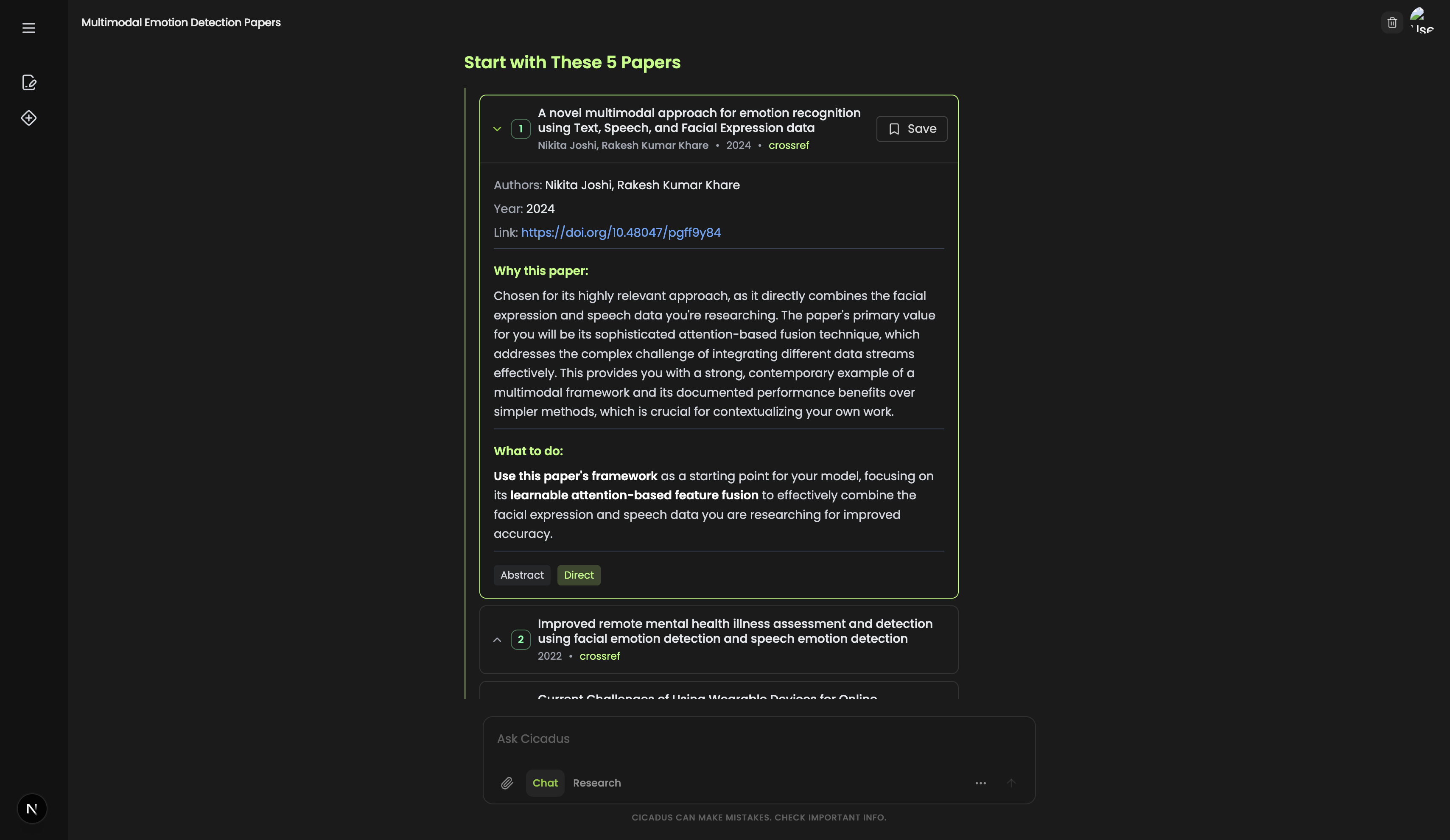
Ask a question or upload a seed paper. Cicadus maps the field, reads why each citation exists, and shortlists what deserves a full read.
- Semantic discovery
- Citation network
- Gap detection
Find the gems in your field. Three products, one library: Discover, Conflicts, and Check.
Cicadus monitors your field daily and surfaces what deserves attention now.
Discover
Daily compression from field noise to a short reading list.
0
monitored daily
Papers tracked across your field every day
00
new today
Fresh publications that matched your focus
0
curated
Filtered for relevance and citation context
0
worth reading
The short list that deserves your time
One loop across Discover, Conflicts, and Check — same library, same source sentences.
Discover
Upload a paper or ask a research question to set the frame for discovery — so Cicadus knows what you’re actually trying to answer.
Discover
Cicadus builds the citation map around your seed: linked papers, clusters, and how the field connects — not another unsorted search pile.
Discover
Pick a core paper so search stays grounded in what matters to you. Everything that follows stays relative to that anchor.
Conflicts
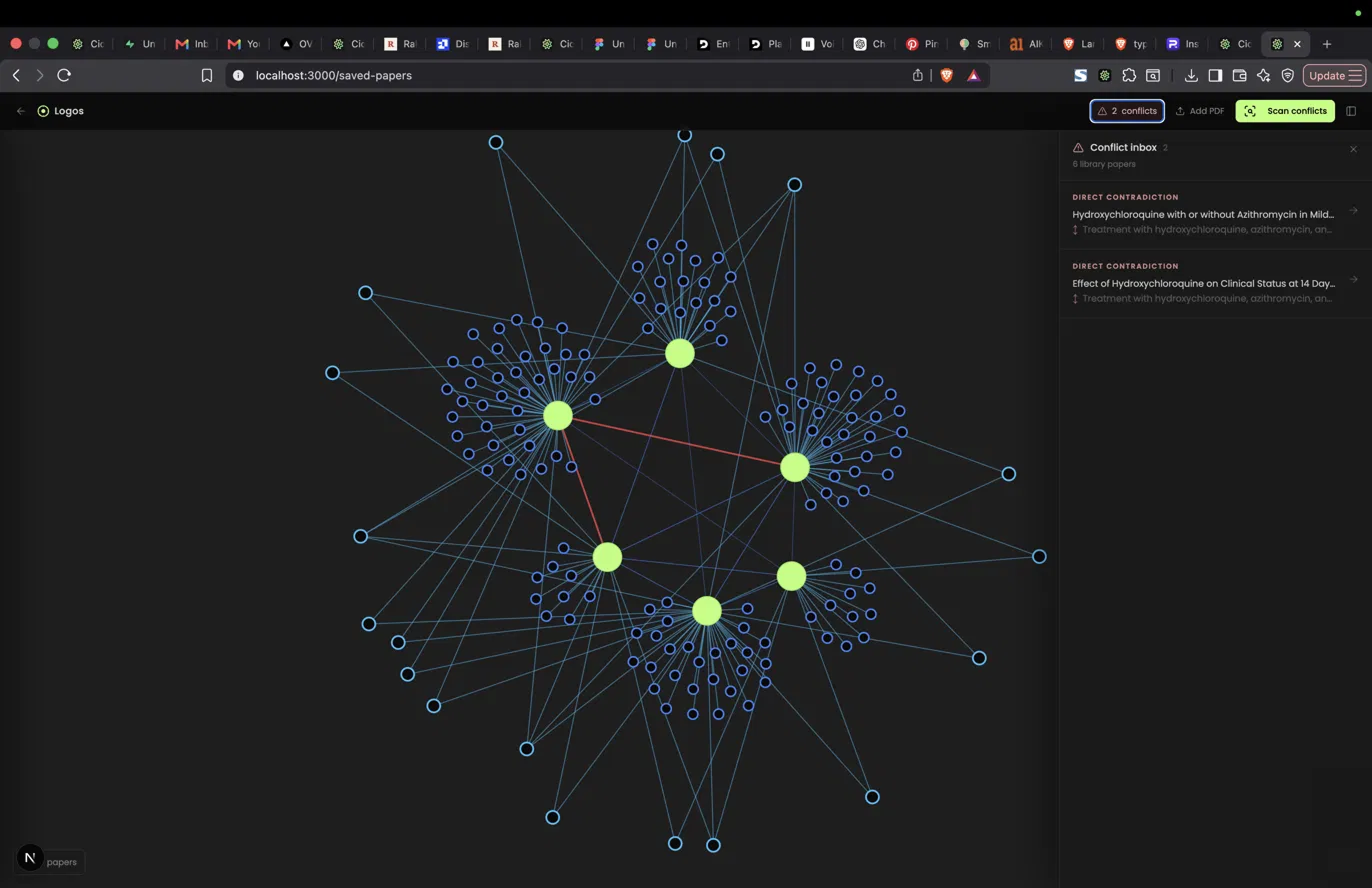
Read citation intent and conflicts in the map — support, critique, method, and the sentences that actually disagree.
Check
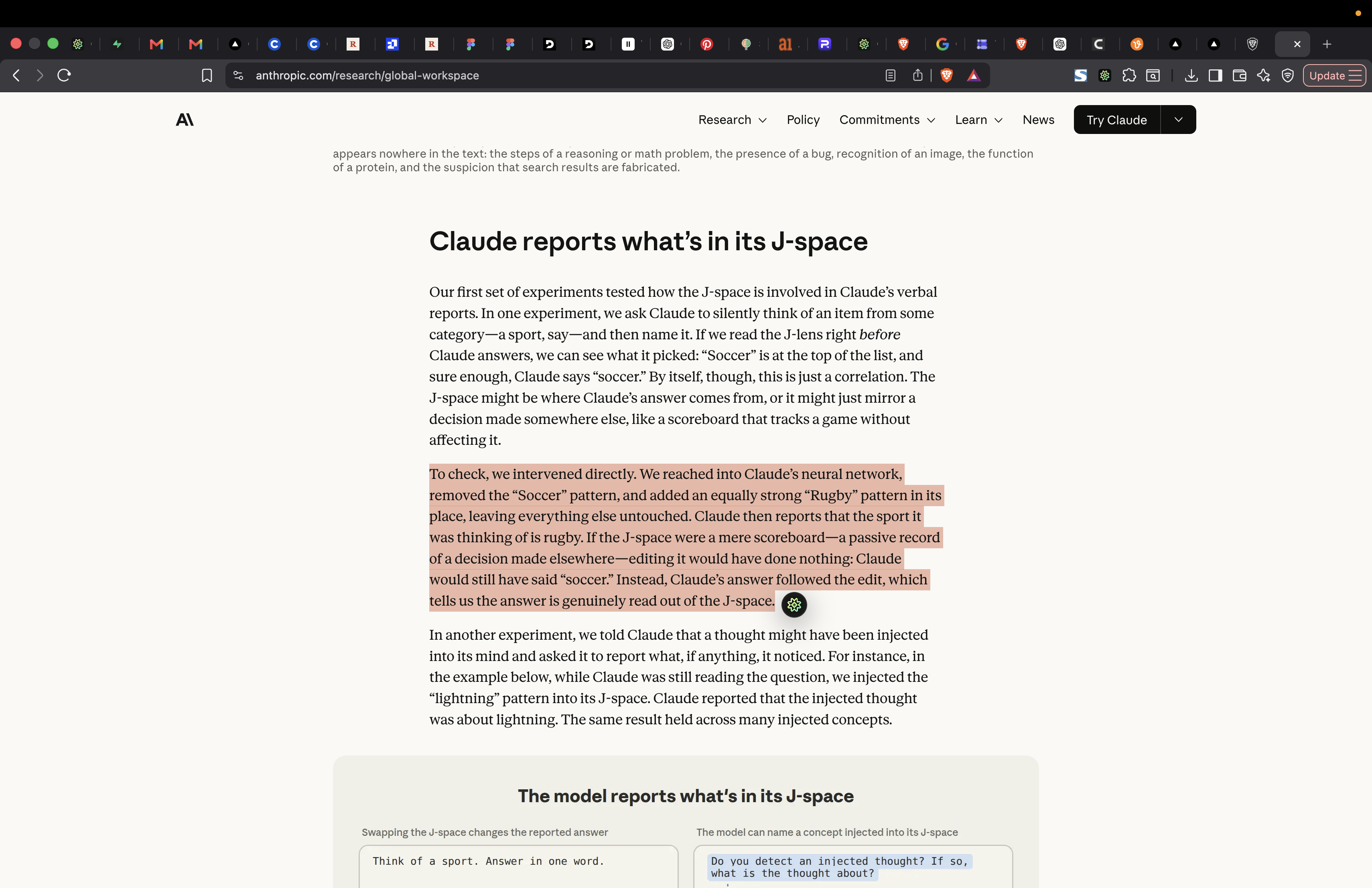
Highlight a claim in the paper you’re reading. Cicadus runs it against your library and returns source sentences — no paste into a chat.
Products
Three products on one library — discover the field, surface the conflicts, then check a claim while you read.
Ask a question or upload a seed paper. Cicadus maps the field, reads why each citation exists, and shortlists what deserves a full read.
Cicadus compares claims, not titles. When two papers in your library contradict each other, you get both sentences and the intent behind them.
Highlight a sentence while you read. Cicadus runs it against papers you have already saved and answers with the source line — not a chat guess.
The same evidence layer under all three products — used across universities.
Understands research intent, not keyword overlap — so related work surfaces because it belongs in the argument, not because it shares a title word.
See which papers connect the field — and which ones are structural vs. peripheral.
Separate support, background, critique, and method so volume doesn’t masquerade as consensus.
Find where the literature thins out, so your contribution has a clear place to land.
Keep every insight attached to evidence you can open, quote, and defend.
students
universities
Every insight links back to a source sentence. Conflicts and in-paper checks run on your library.
How it works, accuracy, plans, and where it fits.
Cicadus is three products on one library: Discover maps the field, Conflicts shows where papers disagree, and Check verifies a highlighted claim against papers you’ve saved — each claim linked back to a source sentence.
Every insight is tied back to source sentences and citation context, so you can verify claims instead of trusting a black-box summary. If you can’t open the evidence, it shouldn’t enter your review.
Yes. Cicadus is built for cross-disciplinary research — computer science, medicine, social sciences, humanities, and more. The workflow stays the same: question, map, anchor, understand, then check claims against your library.
Search finds documents. Chat summarizes pages. Cicadus maps how papers argue with each other — citation intent, conflicts, source sentences, and the short list worth reading — so you leave with structure, not another pile of tabs.
It compares claims, not titles. When two papers in your project disagree, Cicadus shows the sentences that conflict — with citation intent — so you can see the debate instead of a red or green stamp on the whole paper.
Yes. Highlight a sentence in the paper you’re reading and Cicadus checks it against your library. You get source-backed support or conflict from papers you’ve already saved, instead of pasting the claim into a chat with no corpus.
Not every citation means the same thing. Cicadus separates support, background, critique, and method so high mention counts don’t get mistaken for consensus — and contested claims stay visible.
You can upload research PDFs — journal articles, preprints, and conference papers — or start from a research question. More input types will expand as the product grows.
Yes. You can start exploring for free. Paid plans unlock higher limits when you need them — see Pricing for current options.
Graduate students, PhD researchers, PIs, and industry research leads who need to review literature quickly without losing rigor — especially when entering a new subfield or defending a contribution.
No. It helps you decide what deserves a full read and why a citation exists. The point is better judgment with receipts — not skipping the literature.
Uploads and workspace content are used to run your session and improve product reliability. We don’t sell your research. See the Privacy Policy for details on retention and controls.